Cruising After Joint Replacement: What Seniors Must Know
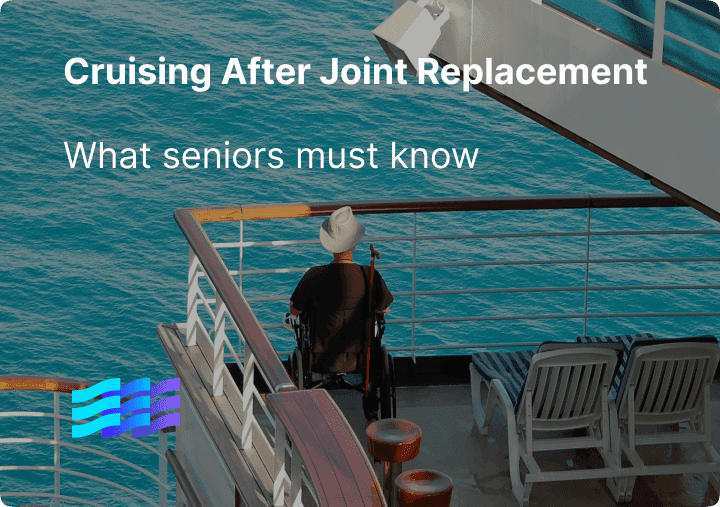
Cruising After Joint Replacement: What Seniors Must Know
Joint replacement surgery doesn’t have to end your cruising life — but timing, preparation, and ship selection make all the difference. While there is no one-size-fits-all timeline, many orthopedic surgeons recommend waiting at least six weeks after surgery before traveling, with higher-risk patients often advised to wait up to three months. With the right medical clearance, cabin choice, and itinerary planning, a cruise can be a comfortable, low-exertion vacation during your recovery.
When Is It Safe to Cruise After Joint Replacement Surgery?
Six weeks is a common benchmark for discussing travel after joint replacement, but it should be viewed as a starting point rather than a universal milestone. The American Association of Hip and Knee Surgeons (AAHKS) notes that low-risk patients may be able to travel relatively soon after joint replacement, provided they take appropriate precautions such as DVT prophylaxis, compression stockings, and adequate hydration. Higher-risk patients—including those with a history of blood clots, obesity, or cardiovascular complications—should wait longer and consult both their surgeon and primary care physician before booking a cruise.
The type of replacement matters too:
- Total hip replacement: Depending on the surgical approach, you may be advised to avoid bending the hip beyond 90 degrees, crossing your legs, or twisting during early recovery. Prolonged sitting in cramped spaces can increase discomfort, so regular movement during travel is important.
- Total knee replacement: Swelling and stiffness can persist for three to six months, so take extra care on uneven surfaces such as tender ports and cobblestone streets.
- Partial replacements and resurfacing procedures: Recovery timelines are often shorter, but individual variation is significant.
Pro Tip: Ask your surgeon specifically about "travel clearance" at your 4–6 week post-op appointment. Get written confirmation of any restrictions — cruise ship medical staff may ask to review it if you seek onboard treatment.
A cruise is actually well-suited to early-recovery travel compared to land-based trips: your cabin is steps from dining, entertainment is brought to you, and sea days allow genuine rest. The challenge is in the details — embarkation, tender ports, and excursion selection.
Getting Medical Clearance and Documentation
Before booking, compile a travel medical packet that covers every scenario you might encounter at sea.
What to gather before you sail:
- Surgeon's clearance letter — dated within 30 days of sailing, stating your procedure, date of surgery, current restrictions, and fitness to travel
- Operative report summary — useful if you need treatment at a port-of-call hospital unfamiliar with your implant
- Implant card or implant documentation — if provided by your hospital or surgeon, carry documentation identifying your joint replacement, including the implant manufacturer and model number when available.
- Current medication list — including any anticoagulants like rivaroxaban (Xarelto) or enoxaparin (Lovenox) with dosing schedule
- DVT prophylaxis documentation — confirmation from your physician that you're on an appropriate blood clot prevention protocol for travel
Bring physical copies and digital backups stored in cloud storage or emailed to yourself. Cruise ship medical centers operate as urgent care facilities, not full hospitals — having your records on hand prevents dangerous gaps in your care.
Navigating Embarkation and Security Scanners
Metal implants may trigger airport-style security screening at cruise terminals, depending on the equipment used. This is a routine part of the screening process and is generally straightforward, but it's worth being prepared to help avoid unnecessary delays or stress on embarkation day.
What to expect at the terminal:
- Standard walk-through metal detectors will alarm with hip or knee implants. Present your implant card to security staff immediately.
- Most cruise terminals use secondary screening (handheld wand) as standard protocol once the detector alarms. This is non-invasive.
- Some newer terminals use millimeter-wave scanners (similar to airport body scanners) that may not alarm for implants — but don't count on it.
Embarkation logistics for joint replacement patients:
- Request wheelchair assistance in advance — many major cruise lines offer terminal wheelchair assistance for guests with mobility needs. Arrange it through the cruise line's accessibility or special needs team before sailing rather than waiting until embarkation day.
- Arrive during your assigned check-in window — choosing the earliest available arrival time and arranging mobility assistance in advance can help minimize waiting and standing.
- Use priority boarding if available — passengers with mobility needs are typically boarded before general boarding begins.
Pro Tip: Call the cruise line's accessibility team (not general reservations) at least 30 days before sailing to log your mobility needs formally. This creates a ship-side record that follows you from terminal to gangway to cabin assignment.
Choosing the Right Cabin Location

Cabin placement is one of the highest-impact decisions a joint replacement patient can make. The wrong location means hundreds of extra steps per day on a healing joint.
Key principles for cabin selection:
- Midship placement — minimizes walking distance to elevators, dining, and show venues. Avoid bow and stern cabins.
- Low deck proximity to elevators — choose a cabin near an elevator bank to minimize walking while providing convenient access to dining venues, entertainment, the medical center, and embarkation areas. Review the ship's deck plan before booking to find the location that best suits your needs.
- Accessible staterooms — for guests who require accessible features, these cabins include roll-in or transfer showers, fold-down shower seats, grab bars, wider doorways, and additional maneuvering space to support safer, more comfortable movement. If you need these accommodations, reserve them through the cruise line's accessibility team, as inventory is limited.
For a deeper dive into how to evaluate cabin position relative to ship layout, see our guide on How To Choose a Room on a Cruise Ship.
| Cabin Feature | Standard Cabin | Accessible Cabin |
|---|---|---|
| Shower type | Step-in shower (varies) | Roll-in or transfer shower with seat |
| Doorway | Standard | Wider doorway |
| Toilet height | Standard | Raised or accessible-height |
| Grab bars | None | Shower, toilet, and entry |
| Floor space | Standard | Larger maneuvering space |
| Threshold steps | May be present | Minimal or low threshold |
Pro Tip: Before booking, review the ship's deck plan and choose an accessible cabin near a midship elevator bank. Avoid cabins directly above or below theaters, nightclubs, pool decks, or other high-traffic public areas to reduce walking and minimize potential noise.
Tender Ports and Mobility Limitations
Tender ports — where the ship anchors offshore and passengers take small motorized boats to reach land — are the single biggest mobility challenge for joint replacement patients. The transfer from ship to tender involves steps, a gap between surfaces, and movement on a rocking vessel.
Ports that often involve tendering on some cruise itineraries:
- Santorini, Greece
- Bora Bora, French Polynesia
- Cabo San Lucas, Mexico (some sailings)
- Catalina Island, California
- Kotor, Montenegro (occasionally)
For passengers recovering from a recent joint replacement, tendering may not be advisable during the first 3–6 months after surgery, depending on your recovery and your surgeon's advice. Stepping onto a moving tender boat can increase the risk of falls because of the vessel's movement and the gap between the ship and the tender.
What to do instead:
- Check the ship's daily program the night before — ports are confirmed as "pier" or "tender" and this information is also available on most cruise line apps before sailing.
- On tender days, enjoy the ship at its emptiest. The pool, specialty restaurants, and spa are significantly less crowded.
- Notify the guest services desk of your mobility status — some lines will prioritize accessible tender boarding if the port is deemed safe enough for you to attempt.
Pro Tip: When comparing itineraries, favor ports where ships dock alongside a pier rather than requiring tender transfers. Bermuda itineraries typically dock at the Royal Naval Dockyard (King's Wharf), while Caribbean ports such as Nassau, Philipsburg (St. Maarten), and San Juan are also docked on most sailings.
Shore Excursions That Work Post-Replacement

Not all shore excursions are off-limits after joint replacement — but the wrong ones can set back your recovery by weeks. The guiding principle is low-impact, seated, and paved.
Excursion types that work well:
- Panoramic bus or coach tours — seated throughout, climate-controlled, and typically include accessible boarding
- Boat or catamaran tours — minimal walking, scenic, and restful
- Food and wine tastings — usually conducted in restaurants or wineries with seating
- Scenic train journeys — Alaska's White Pass & Yukon Route in Skagway is a standout example
- Private car or van tours — allows you to set your own pace and skip steps that don't suit you
Excursion types to avoid in early recovery:
- Walking tours over 1–2 miles
- Cobblestone-heavy historic districts (Rome, Dubrovnik, Old San Juan)
- Kayaking, snorkeling, or any activity requiring kneeling or squatting
- Bike tours (even e-bikes require mounting/dismounting that stresses healing joints)
- Zip-lining or any high-impact adventure activity
Pro Tip: Book excursions labeled "Easy" or "Accessible" through the cruise line rather than third-party operators. Cruise line-operated tours are held to the ship if you're delayed, and the accessibility team has vetted the physical demands. For more on evaluating excursion difficulty, see our guide on how to book shore excursions.
Onboard Physical Therapy and Medical Facilities
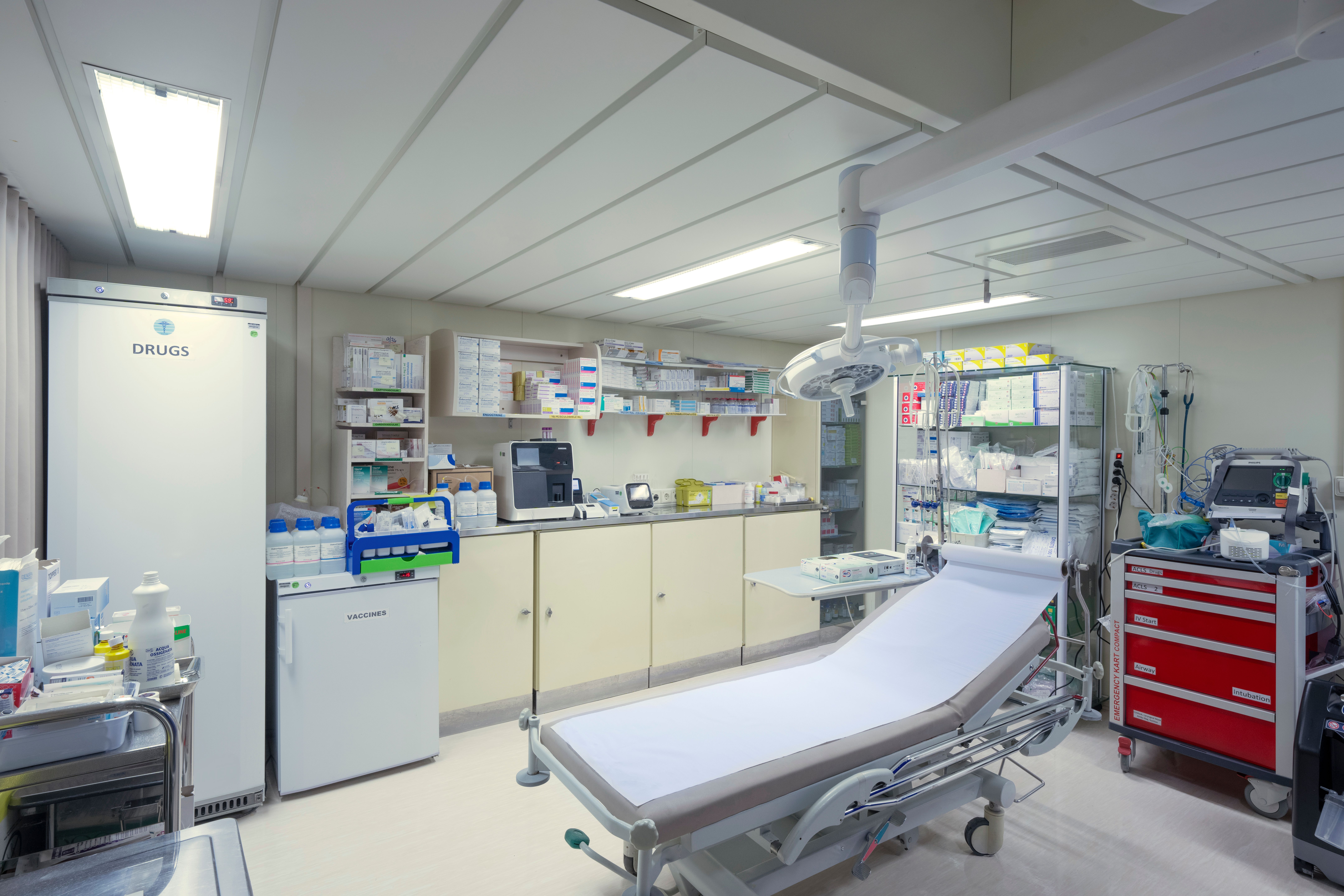
Modern cruise ships have well-equipped medical centers that can treat many illnesses and injuries, but they are not hospitals or rehabilitation centers. Understanding what onboard medical services can—and cannot—provide helps set realistic expectations and reduces unnecessary anxiety during your trip.
What ship medical centers typically offer:
- Physician and nursing staff available for medical care and emergencies
- Basic orthopedic assessment and wound care
- IV fluids and anticoagulation management when clinically appropriate
- Onboard pharmacy with commonly used medications (availability varies; bring enough prescription medication for your trip and confirm critical medications with the cruise line in advance)
- Referral or medical evacuation to shoreside hospitals when care exceeds onboard capabilities
What most ships do not offer:
- Formal physical therapy programs
- PT-grade rehabilitation equipment
- Orthopedic specialists
Fitness center workarounds for PT maintenance:
Many cruise ships have stationary bikes, which are commonly incorporated into hip and knee replacement rehabilitation because they provide a low-impact way to improve joint mobility and muscle strength. If your surgeon or physical therapist has cleared you to use exercise equipment, a stationary bike can be a suitable onboard option. Resistance bands (which you should pack) can also help you continue many of your prescribed physical therapy exercises in your cabin.
Some premium cruise lines, including Celebrity Cruises and Holland America Line, offer personal training sessions that may be adapted to accommodate your recovery, although you should discuss your mobility restrictions with the trainer beforehand.
Pro Tip: Before sailing, ask your physical therapist to write out a 7-day at-sea exercise routine you can perform independently in your cabin or the fitness center. This keeps your recovery on track without requiring specialized equipment.
Travel Insurance Considerations for Joint Replacement Patients
Standard travel insurance often excludes pre-existing conditions, and a recent joint replacement will generally be treated as one. Without appropriate coverage, an emergency medical evacuation could leave you facing a five-figure bill.
What to look for in a policy:
- Pre-existing condition waiver — many travel insurance policies offer this benefit if coverage is purchased within 14–21 days of your initial trip deposit, although eligibility requirements vary by insurer. For travelers recovering from joint replacement surgery, it can be one of the most valuable policy features.
- Medical evacuation coverage — look for a minimum of $250,000 in evacuation coverage. Helicopter evacuations from remote ports or at-sea medevacs are extremely expensive.
- Cancel for any reason (CFAR) — if you're concerned your recovery could delay your trip, this optional upgrade may reimburse a percentage of your prepaid, non-refundable trip costs if you choose to cancel for reasons not otherwise covered by the policy. Reimbursement percentages and eligibility requirements vary by insurer.
- Trip cancellation for covered medical reasons — if your surgeon determines you are medically unable to travel, this benefit may reimburse up to 100% of eligible prepaid, non-refundable trip costs, subject to the policy's terms and documentation requirements.
What to disclose:
Be completely transparent about your surgery date, implant type, and any post-surgical complications when applying for coverage. Undisclosed conditions void claims.
Pro Tip: Cruise line-sold insurance may be convenient, but travelers recovering from joint replacement surgery should compare it with independent travel insurance policies. Independent insurers often offer more flexible options for pre-existing medical condition waivers, higher emergency medical and evacuation coverage limits, and broader policy choices.
Packing Essentials for Joint Replacement Patients

Your packing list needs a dedicated medical layer beyond the usual cruise checklist.
Medical and mobility essentials:
- Compression stockings (graduated 15–20 mmHg or as prescribed) — wear during all embarkation travel, sea days with prolonged sitting, and tender transfers
- Resistance bands — for maintaining PT exercises in-cabin
- Collapsible walking cane or trekking pole — packs flat and provides stability on uneven surfaces
- Portable raised toilet seat — if your accessible cabin's toilet height is insufficient, a portable riser is a compact solution
- Shower seat — confirm your accessible cabin has one; if not, a lightweight travel shower bench is worth packing
- Pill organizer with lock — for anticoagulants and other medications on a strict schedule
- Ice pack sleeves — reusable gel packs for post-excursion swelling management
- Implant card and medical documentation — in both carry-on and checked luggage
What to confirm with your cabin steward on day one:
- Extra firm pillow placement for joint elevation while sleeping
- Removal of any throw rugs or low furniture that creates trip hazards
- Location of the nearest ice machine (for swelling management)
For a comprehensive general packing framework, our cruising with mobility aids guide covers additional equipment considerations.
Cruise Lines With Strong Accessibility Support
Not all cruise lines invest equally in accessibility infrastructure. For joint replacement patients, the difference between a well-supported and poorly-supported line can define the entire experience.
| Cruise Line | Accessible Cabins | Roll-In Showers | Automatic/Power-Assisted Doors | Accessibility Team | Accessible Shore Excursion Options |
|---|---|---|---|---|---|
| Holland America | Yes (fleetwide) | Yes | Select ships | Yes | Yes |
| Celebrity Cruises | Yes (fleetwide) | Yes | Select ships | Yes | Yes |
| Princess Cruises | Yes (fleetwide) | Yes | Select ships | Yes | Yes |
| Royal Caribbean | Yes (fleetwide) | Yes | Select ships | Yes | Yes |
| Viking Ocean | Yes (limited number) | Yes | Yes | Yes | Limited |
| Carnival | Yes (fleetwide) | Yes | Select ships | Yes | Limited |
| MSC Cruises | Yes (fleetwide) | Yes | Select ships | Yes | Limited |
Standout features by line:
- Holland America is widely recognized for its accessibility features and senior-friendly onboard experience. Ships like Nieuw Statendam feature wide corridors and extensive elevator access. For more on this line, see our Princess Cruises vs. Holland America comparison.
- Celebrity Cruises Edge-series ships (Celebrity Edge, Celebrity Apex, Celebrity Beyond, Celebrity Ascent) feature power doors throughout, wider corridors, and an accessibility team reachable pre-cruise.
- Princess Cruises has a strong track record with its Access Office and offers accessible shore excursion pre-screening.
- Viking Ocean ships are smaller (930 passengers) with fewer accessible cabin categories, but the intimate scale means less walking overall.
For senior-specific cruise recommendations beyond accessibility, our guide to best cruises for seniors covers lines, destinations, and timing in detail.
Key Takeaways
- Wait at least six weeks post-surgery before cruising, and get written medical clearance from your surgeon — higher-risk patients should wait up to three months.
- Book accessible staterooms through the accessibility desk, not general reservations — these cabins include roll-in showers, grab bars, and wider doorways that matter for joint recovery.
- Avoid tender ports in the first 3–6 months post-surgery; prioritize itineraries with docked (pier) ports only.
- Shore excursions should be seated, paved, and low-impact — panoramic bus tours, scenic train rides, and boat tours are ideal; cobblestone walking tours are not.
- Travel insurance with a pre-existing condition waiver is non-negotiable; purchase it within 14–21 days of your initial deposit for the broadest coverage.
Frequently Asked Questions
Q: How long after hip replacement surgery can I go on a cruise?
Most orthopedic surgeons recommend a minimum of six weeks before traveling after hip replacement surgery. The American Association of Hip and Knee Surgeons notes that low-risk patients can travel sooner with appropriate DVT precautions, while higher-risk patients may need to wait up to three months. Always get written clearance from your surgeon before booking.
Q: Will my hip or knee implant set off metal detectors on a cruise ship?
Yes, metal implants will typically trigger standard walk-through metal detectors at cruise terminals. Carry your implant card (issued by your hospital at discharge) and present it to security staff immediately. Secondary screening with a handheld wand is standard protocol and non-invasive.
Q: What type of cruise cabin is best after joint replacement surgery?
An accessible stateroom in a midship location, close to elevator banks, is the optimal choice. These cabins feature roll-in showers with fold-down seats, grab bars, raised toilet seats, wider doorways, and more floor space than standard cabins. Book through the cruise line's accessibility desk, as inventory is limited and sells out early.
Q: Are tender ports safe for joint replacement patients?
Tender port transfers — boarding a small motorized boat from the ship to shore — are generally not recommended in the first 3–6 months post-surgery. The instability of stepping onto a moving vessel creates significant fall risk. On tender days, remaining onboard is a legitimate and often enjoyable option, as the ship is at its least crowded.
Q: Does travel insurance cover a joint replacement as a pre-existing condition?
Standard travel insurance policies exclude pre-existing conditions unless you purchase a policy with a pre-existing condition waiver, typically available if bought within 14–21 days of your initial trip deposit. Compare cruise line-sold insurance with independent travel insurance policies, paying particular attention to pre-existing medical condition waivers, emergency medical coverage, and medical evacuation limits.
Q: Can I do physical therapy exercises on a cruise ship after joint replacement?
Yes. Many cruise ship fitness centers have stationary bikes, which are commonly incorporated into hip and knee replacement rehabilitation because they provide a low-impact way to improve joint mobility and muscle strength. Use exercise equipment only if your surgeon or physical therapist has cleared you to do so.
Fast Facts
- Best For: Seniors 6+ weeks post hip or knee replacement seeking a low-exertion, high-comfort vacation
- Minimum Wait Time: 6 weeks post-surgery (low-risk); up to 3 months (high-risk)
- Best Cabin Type: Accessible midship stateroom with roll-in shower, booked through the accessibility desk
- Ports to Prioritize: Docked (pier) ports only — avoid tender ports in early recovery
- Best Cruise Lines for Accessibility: Holland America, Celebrity Cruises (Edge-series), Princess Cruises
- Insurance Requirement: Pre-existing condition waiver policy; purchase within 14–21 days of deposit
- Top Excursion Type: Panoramic bus tours, scenic train journeys, boat tours
- Key Documents to Pack: Surgeon's clearance letter, implant card, operative summary, medication list
- Best Time to Book: Book 4–6 months before sailing to improve your chances of securing an accessible cabin.